Description
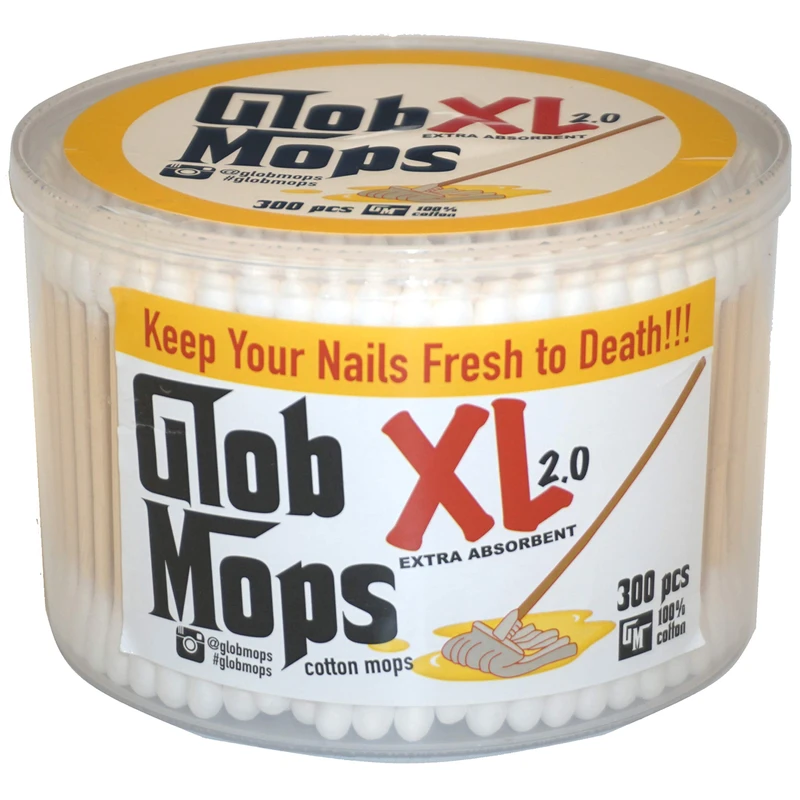
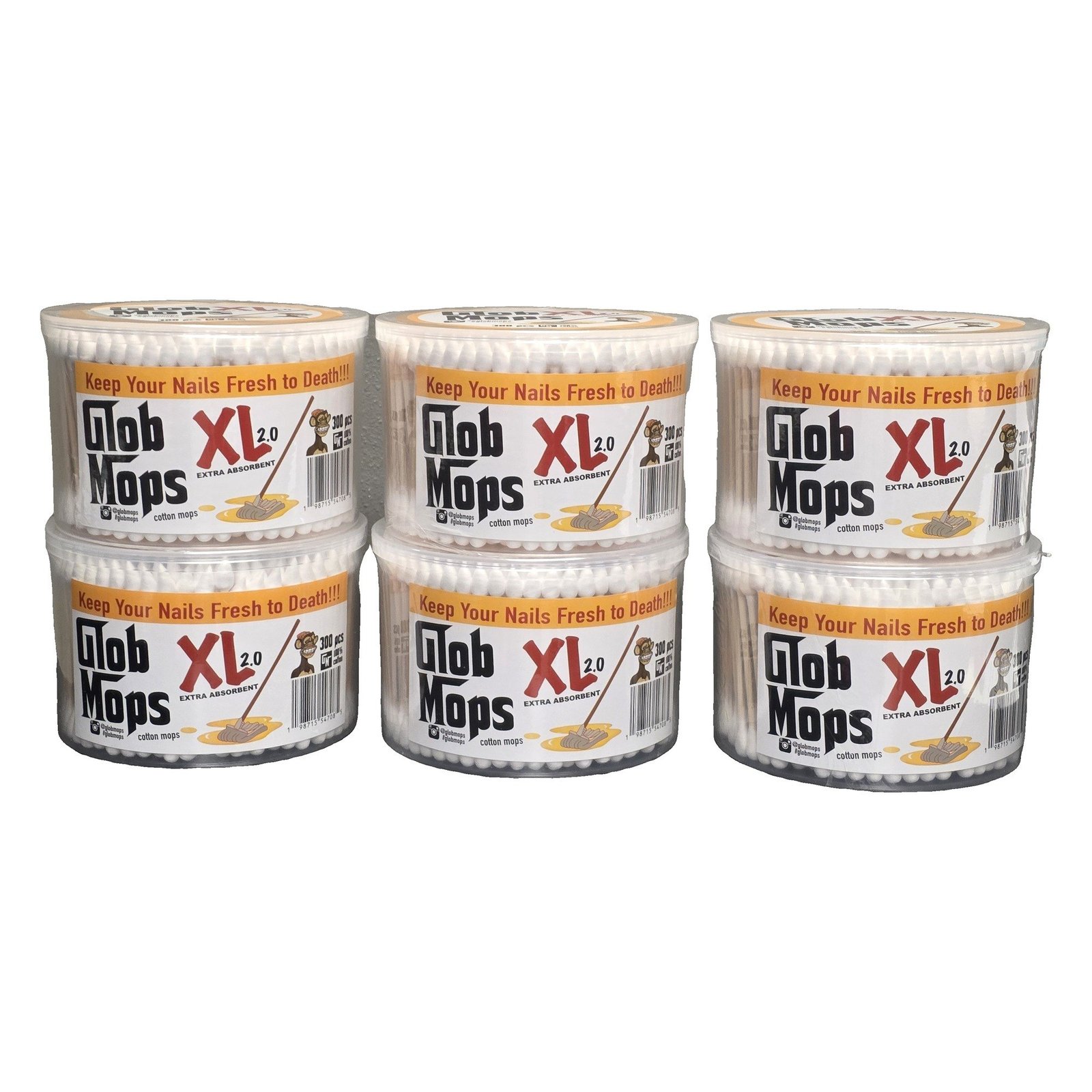
Glob Mops XL 2.0 are extra-thick, dual-tip cotton swabs on eco-friendly bamboo sticks, supplied in a resealable 300-count tub. They were designed for detail work that ordinary drugstore swabs are not built for: a stick that will not bend or snap under pressure, and a cotton head packed with roughly three times the cotton of the original v2 mop, so it absorbs more and sheds less.
Both ends carry a tip, so you get 600 working ends per tub — one end for scrubbing, one clean end for the final wipe.
Why people pick these over regular cotton swabs
- Bamboo stick, not rolled paper. Stays rigid when you lean on it and does not go soft when it gets wet.
- Three times more cotton. Holds more solvent, more residue and more water before it needs swapping.
- Dual tip. Two usable ends per swab — 600 per tub.
- Solvent friendly. Cotton and bamboo hold up to isopropyl alcohol, mineral spirits and most common cleaners.
- Tub packaging. Resealable lid keeps the rest of the tub clean on a bench, in a toolbox or under the sink.
- Bulk count. 300 per tub, so you can use one for the job instead of rationing them.
Specifications
- Brand: Glob Mops
- Model: XL 2.0
- Count: 300 swabs per tub (600 tips)
- Stick material: Bamboo
- Tip material: Cotton
- Tip configuration: Dual tip — a shaped tip on each end
- Cotton density: Approx. 3x the original v2 mop
- Packaging: Resealable tub
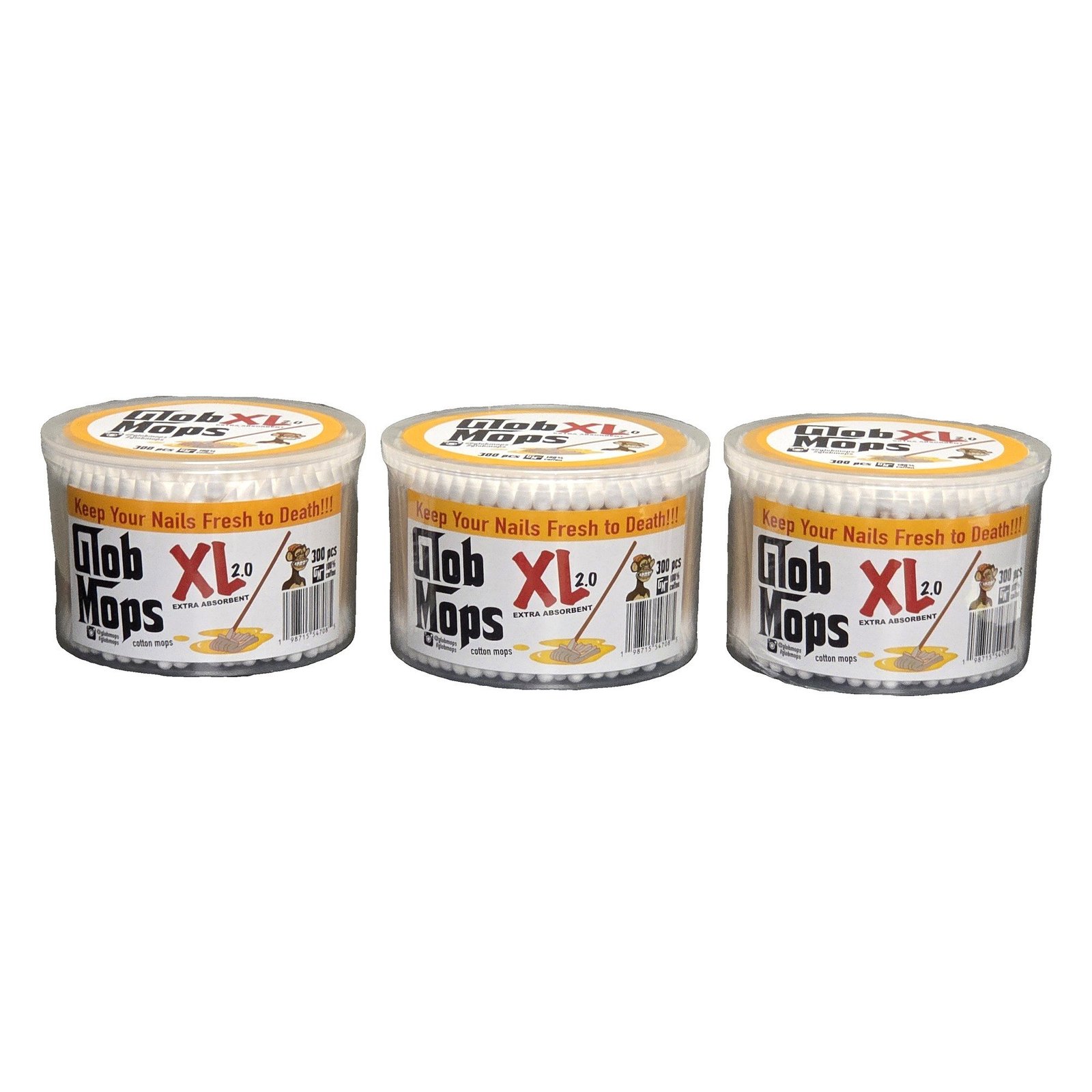
- UPC (single tub): 198715547085
- Shipping weight: 7 oz per tub
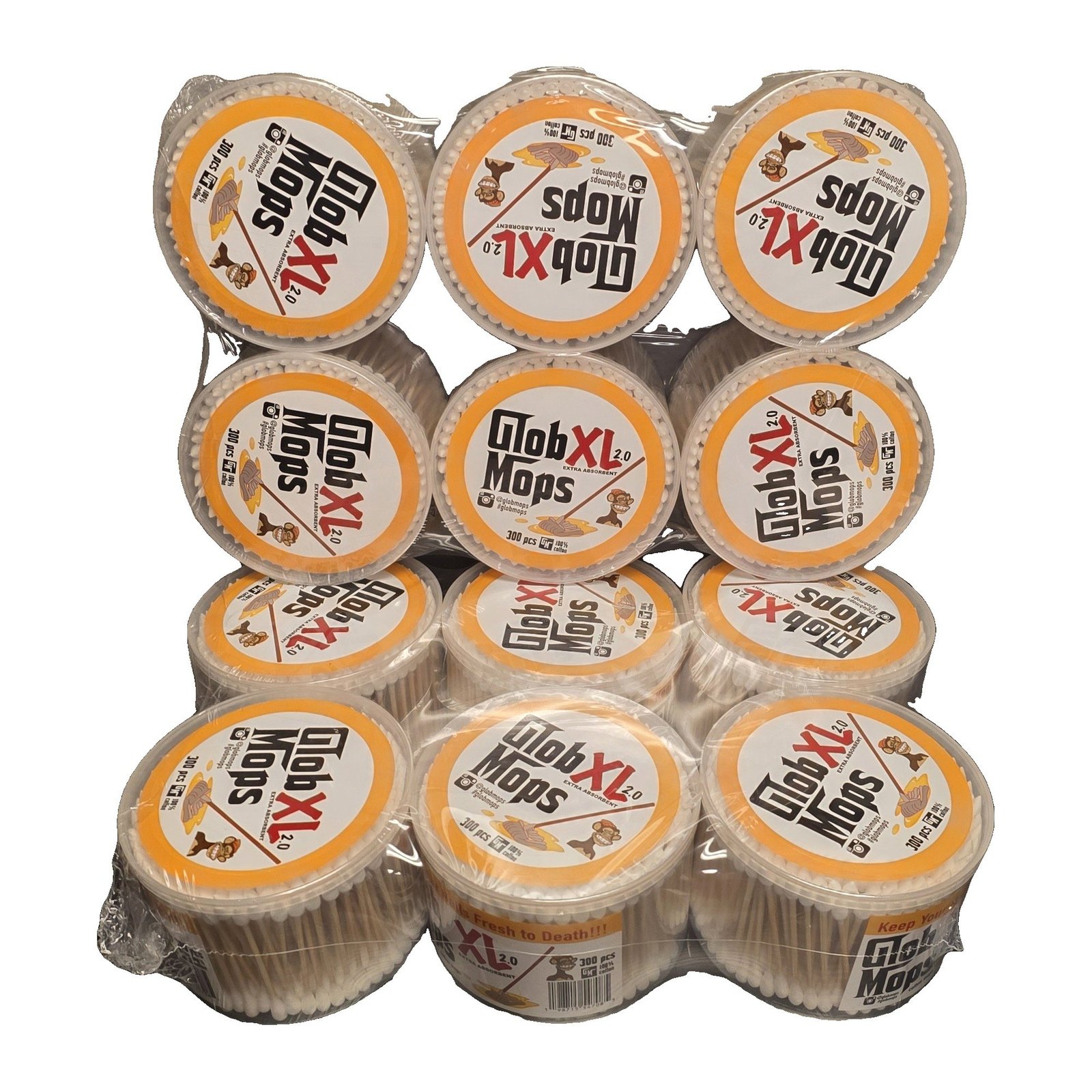
- Pack sizes: 1, 3, 6 or 12 tubs
What people actually use them for
A swab this sturdy stops being a cotton bud and starts being a tool. A few of the hundreds of jobs it handles:
Around the house
- Faucet bases, tap collars and the gap behind the spout
- Sliding window and patio door tracks
- Refrigerator and dishwasher door gaskets
- Oven dial surrounds and range hood seams
- Coffee machine group heads, steam wand tips and grinder chutes
- Blender and food processor blade collars
- Tile grout lines and silicone bead edges
- Cabinet hinge cups and drawer slide rails
- Air vent louvres and register slots
- Light switch plates and outlet edges
- Applying touch-up paint to nail holes and chipped trim
- Spot-applying adhesive remover to sticker residue
- Oiling door hinges, locks and window latches without drips
Auto and powersports detailing
- Dashboard vents, seams and instrument cluster edges
- Badge and emblem recesses
- Around door handles, mirror bases and fuel door hinges
- Wheel lug recesses and centre cap crevices
- Gear shifter boots, cup holders and window switch panels
- Applying trim restorer, ceramic coating or leather dye to small areas
- Battery terminal cleanup
- Chain and derailleur detail on bikes and motorcycles
Electronics and tech
- Charging ports, headphone jacks and USB-C sockets
- Keyboard key wells and laptop hinge gaps
- Speaker grilles and phone earpiece meshes
- Camera lens barrels, body seams and battery contacts
- Circuit board flux cleanup with isopropyl alcohol
- Console controller thumbstick collars and trigger gaps
- Turntable stylus housings and cartridge bodies
Workshop, tools and shop floor
- Applying thread locker, contact cement or CA glue exactly where you want it
- Cleaning tile levelling clip slots and trowel notches between mixes
- Wiping flux, epoxy squeeze-out and adhesive strings before they cure
- Machine oiling on sewing machines, small engines and bearings
- Cleaning airbrush needle seats, nozzles and colour cups
- 3D printer nozzle wipes, extruder gears and rail dust
- Solvent-testing a finish on an inconspicuous spot
Hobby, craft and creative work
- Model kit weathering, drybrushing and panel line cleanup
- Resin and epoxy pours — popping bubbles and tidying edges
- Applying alcohol ink, gilding size or leaf adhesive
- Blending pastel, charcoal and pencil work
- Cleaning stamps, dies and embossing plates
- Candle wick centring and wax cleanup
- Doll, miniature and figure painting
- Jewellery cleaning around settings, clasps and links
- Watch case backs, bracelet links and lug gaps
- Musical instrument work — guitar fret edges, tuner posts, brass valve casings, woodwind keys
Personal and everyday
- Nail art detail, cuticle oil and polish cleanup
- Correcting eyeliner and lipstick edges
- Applying ointment or antiseptic to a small area
- Eyeglass hinge and nose pad cleaning
- Hearing aid and earbud case cleaning
- Pet grooming touch-ups on paws and around collars
How to get the most out of them
- Pick the end. Use the tighter tip for slots and seams, the fuller tip for wiping surfaces and soaking up liquid.
- Dampen, do not soak. Dip the tip and press it against the rim of the container so it is damp, not dripping — this keeps solvent out of places it should not go.
- Work in one direction. Drag residue out of the crevice rather than pushing it deeper, and rotate the swab as it loads up.
- Flip and finish. Turn the swab around and use the clean end dry to lift the last of the residue and leave the surface streak free.
- Swap early. A loaded swab redeposits what you just removed. At 300 per tub, changing swabs is cheap.
Frequently asked questions
How many swabs come in a tub?
300 swabs per tub. Every swab has a tip on both ends, so a tub gives you 600 working tips.
What are the sticks made of?
Bamboo. It is stiffer than the rolled paper used in drugstore swabs, so the stick will not fold over when you press into a corner, and it does not go soft when wet.
How are these different from regular cotton swabs?
Two things: roughly three times the cotton on the head, and a rigid bamboo stick. That means more absorption per swab and enough backbone to scrub instead of just wipe.
Can I use them with isopropyl alcohol or other solvents?
Yes. Cotton and bamboo stand up to isopropyl alcohol, mineral spirits and most household cleaners. Always test any solvent on an inconspicuous area of the surface first.
Are they lint free?
They are low lint for cotton swabs, and the denser head sheds far less than a thin drugstore swab. They are not certified lint free, so for cleanroom or optical work use a dedicated cleanroom swab.
Are they reusable?
They are meant to be single use. Rinsing and reusing puts whatever you removed back onto the next surface.
What is the difference between the pack sizes?
Every pack contains the same 300-count tubs — 1, 3, 6 or 12 of them. The per-tub price drops as the pack gets bigger, and orders over $25 ship free.
How fast do they ship?
They ship from our Wisconsin warehouse. Orders over $25 ship free; under that, shipping is a flat $6.95.